Objective: To perform a technical post-mortem analysis of a network intrusion attempt using centralized log management and deep packet inspection.
1. The Vulnerability: Unauthorized Reconnaissance
Network visibility is the cornerstone of defensive security. Without centralized logging, attackers can perform stealthy reconnaissance and lateral movement unnoticed. This project demonstrates the integration of Wazuh (SIEM/XDR) and Wireshark to identify, track, and analyze malicious traffic patterns.
2. Technical Execution: Forensic Triage
I utilized a combination of cloud-based SIEM monitoring and local traffic capture to analyze an active incident. By correlating Wazuh alerts with specific TCP/HTTP streams in a PCAP file, I was able to reconstruct the attacker’s methodology, from initial port scanning to attempted directory traversal.
| Component | Value | Purpose |
|---|---|---|
| SIEM | Wazuh Cloud | Centralized dashboard for real-time alert correlation. |
| Traffic Capture | PCAP (Wireshark) | Raw data for deep packet inspection and stream follow. |
| Log Source | /var/log/auth.log | Analyzing SSH brute-force and privilege escalation. |
| Outcome | Incident Report | Documented findings and remediation steps. |
3. Execution Workflow
- Dashboard Monitoring: Identified a spike in “High” severity alerts on the Wazuh Cloud dashboard originating from a single external IP.
- PCAP Extraction: Captured raw network traffic (
capture.pcap) during the window of the alert to perform granular analysis. - Stream Reconstruction: Followed HTTP and TCP streams in Wireshark to identify the specific payloads used in the attack.
- Hardening: Updated host-based firewall rules and implemented Fail2Ban based on the forensic evidence gathered.
4. Forensic Evidence (Log Snippet)
# Wazuh Alert: Multiple Failed SSH Logins
Rule: 5712 (SSHD Brute Force Attempt)
Source IP: 192.168.1.150
User: root, admin, support
Action: Firewalled via active-response
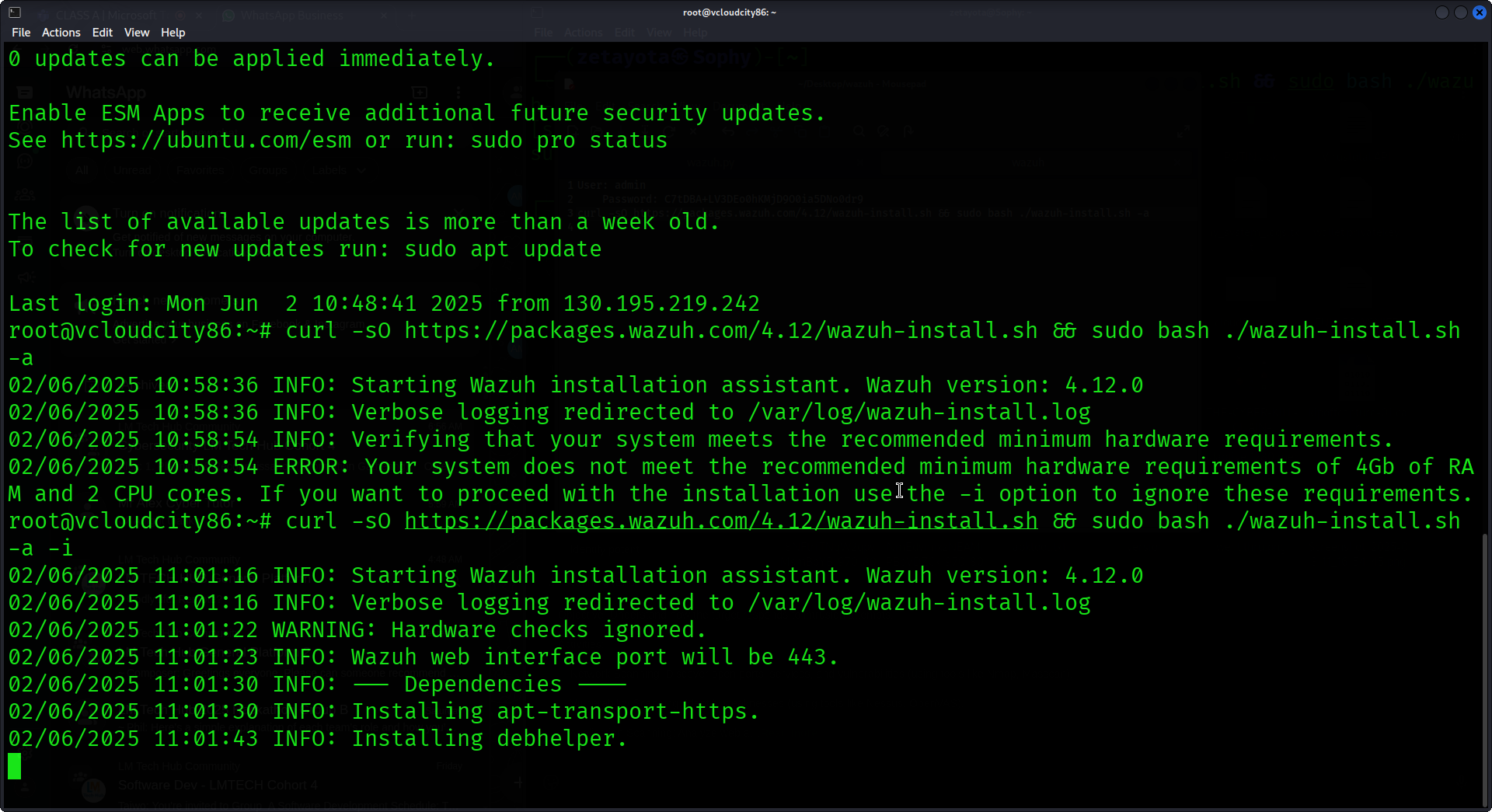
5. Evidence of Work


6. Professional Impact
This project demonstrates a mature Incident Response capability. By successfully bridging the gap between high-level SIEM alerts and low-level packet data, I reduced the “Mean Time to Detection” (MTTD) for network threats. My remediation plan included the deployment of hardened security configurations and automated active-response scripts to neutralize future threats in real-time.