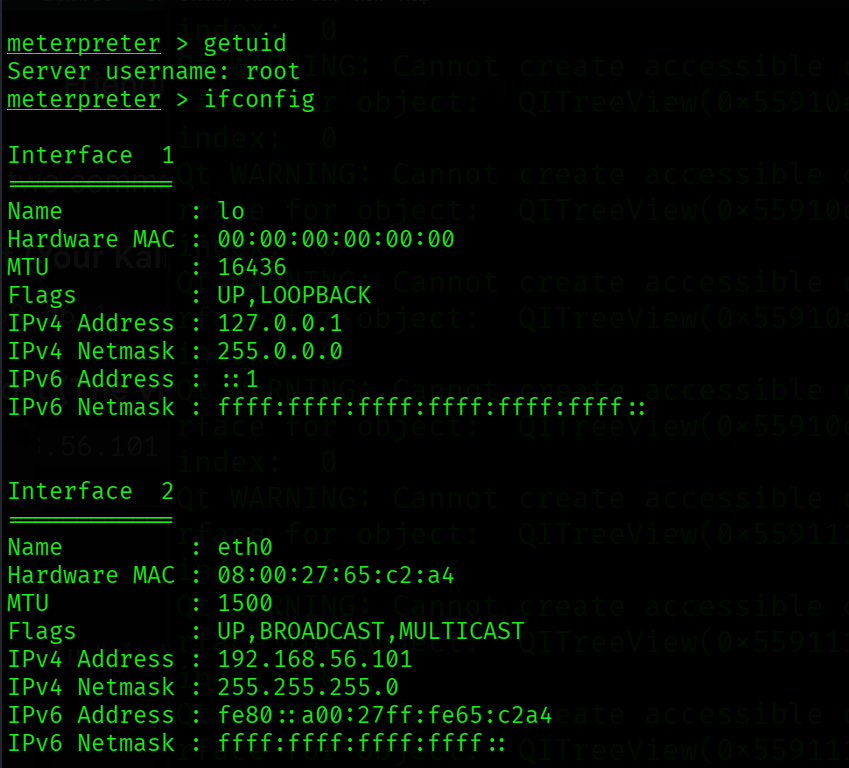
Objective: To perform deep-packet inspection and service fingerprinting on a target host to identify exploitable entry points within the infrastructure.
1. Execution Methodology: The “3-Phase Scan”
A professional scan isn’t just one command; it’s a tiered approach to avoid missing hidden services or misidentifying versions.
- Phase 1: Discovery (Ping Sweep) – Confirming the host is alive.
- Phase 2: Port Scanning (SYN Scan) – Identifying all 65,535 possible TCP “doors.”
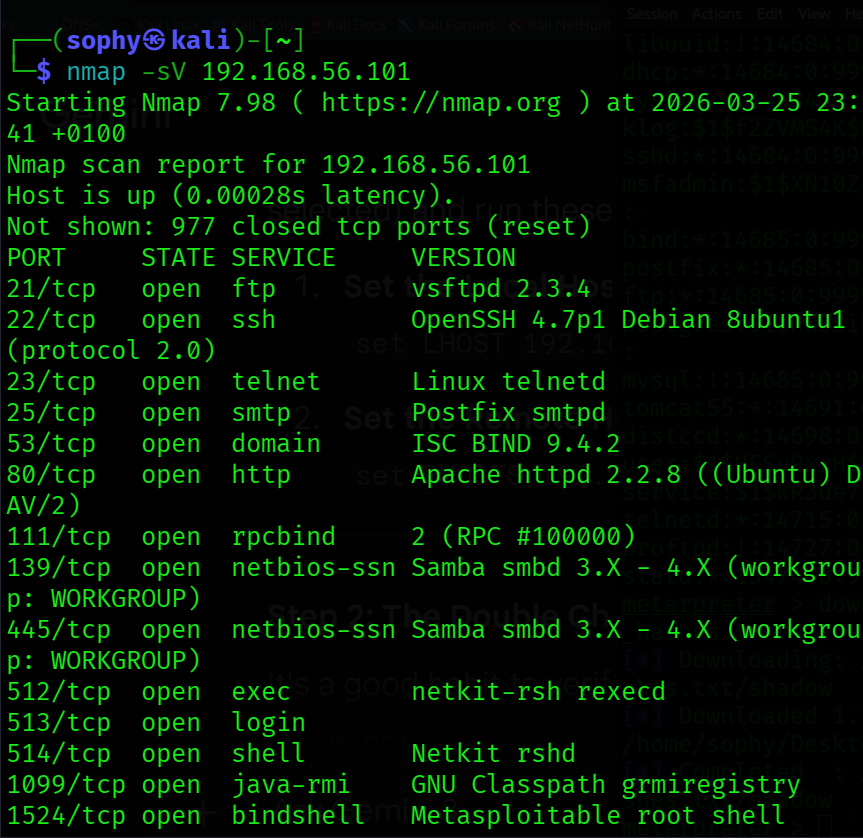
- Phase 3: Service Fingerprinting (-sV) – Forcing the target to reveal exactly what software and version is running on the open ports.
2. Technical Findings (Port 21 Analysis)
During the enumeration of 192.168.56.101, I identified a critical exposure on the File Transfer Protocol (FTP) service.
| Attribute | Value |
|---|---|
| Port / Protocol | 21 / TCP |
| State | Open |
| Service Name | ftp |
| Version Identified | vsftpd 2.3.4 |
| Risk Level | Critical (Backdoor Vulnerability) |
3. Vulnerability Research
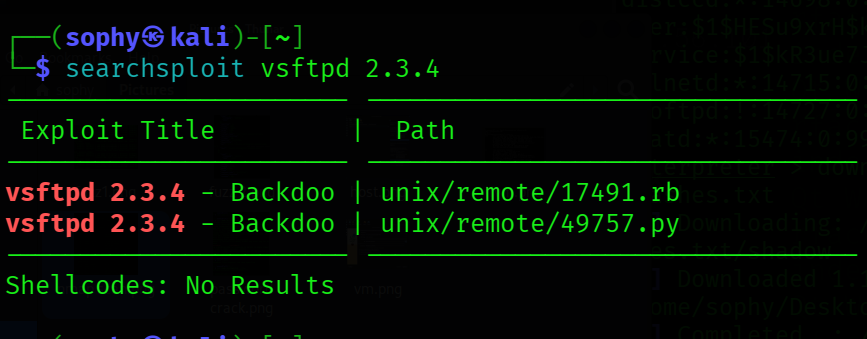
Upon identifying vsftpd 2.3.4, I performed an offline vulnerability search using the Exploit Database (Exploit-DB) via the searchsploit utility on Kali Linux.
- Finding: The specific version of vsftpd (2.3.4) is documented as containing a malicious backdoor added to the source code by an unauthorized party.
- Trigger: Sending a
:)smiley face in the username triggers the opening of a shell on Port 6200.
4. Key Commands & Tools
nmap -T4 -A -v 192.168.56.101: An aggressive scan to pull OS details, service versions, and run default scripts.nmap -p 21 --script ftp-vsftpd-backdoor 192.168.56.101: A targeted script scan to confirm the existence of the specific backdoor before launching an exploit.searchsploit vsftpd 2.3.4: Querying the local Exploit-DB for known vulnerabilities.
5. Professional Impact
By utilizing Service Fingerprinting, I successfully narrowed down the attack surface from dozens of open ports to a single, high-probability exploit. This phase demonstrates a logical transition from “Information Gathering” to “Vulnerability Assessment,” ensuring that the subsequent exploitation phase is precise and effective.